
Kitchen Water Damage Restoration in Alvin, TX
Kitchens have more water sources than any other room, and more places for it to hide. Cabinets, toe kicks and flooring all hold moisture.
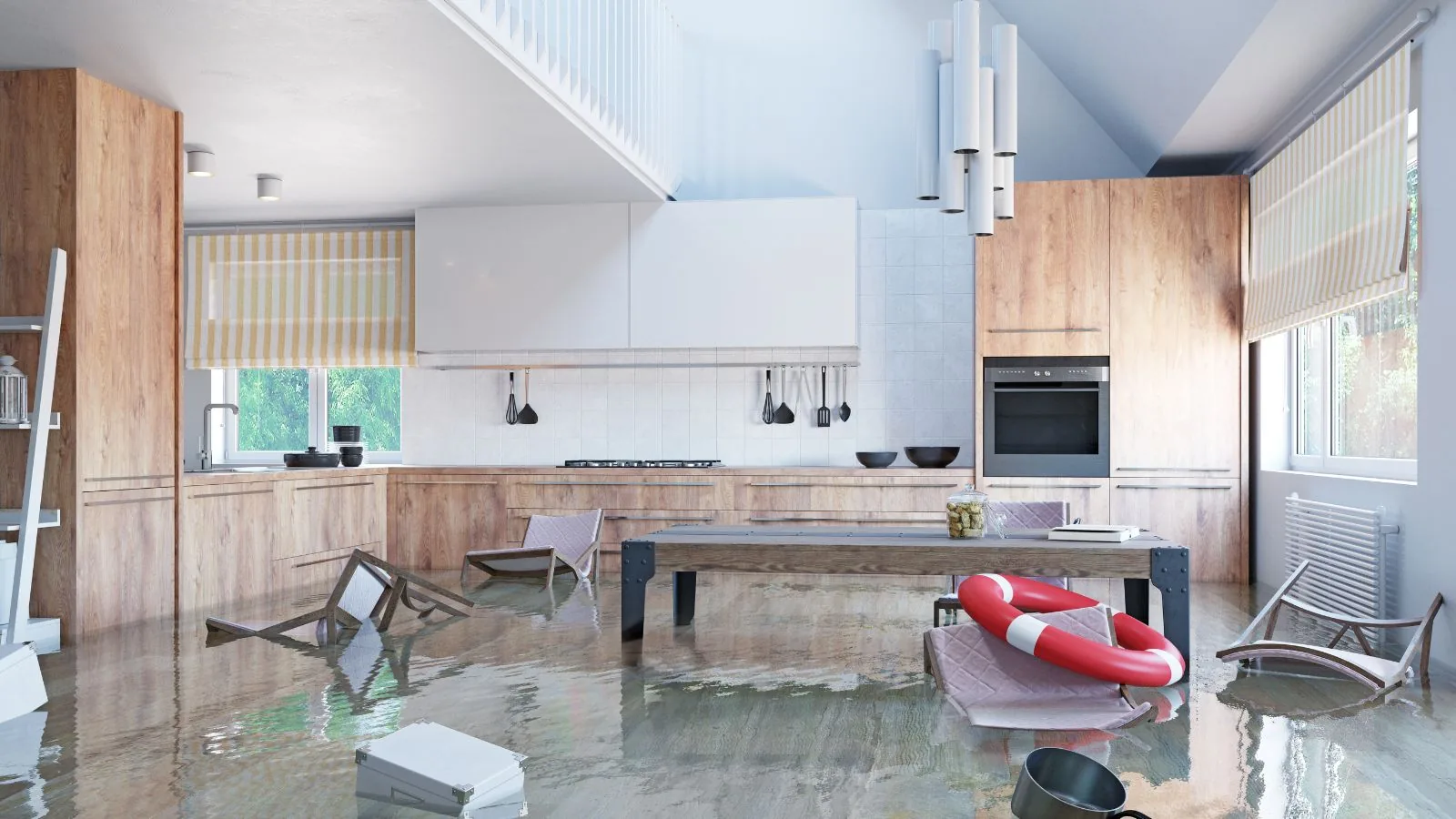
A kitchen is full of plumbing and appliances. There is a sink and a faucet, a dishwasher, often a refrigerator ice maker and sometimes a pot filler. All of them have hoses, valves and fittings. When one fails, water pools on the floor and runs into places that are hard to inspect.
Where Kitchen Water Hides
Under the dishwasher
The subfloor under a leaking dishwasher can be wet for weeks while the dishwasher looks fine.
Cabinet bases and toe kicks
Plywood and particleboard swell and delaminate. Toe kicks trap moisture against the floor.
Under the sink
Slow leaks from P-traps and supply lines soak the cabinet floor and the wall behind.
Behind the refrigerator
An ice maker line can leak unseen and buckle flooring across the kitchen.
Water in the Kitchen?
Close the valve under the sink or the main and call the 24/7 line.
What to Do After a Kitchen Leak
- Shut off the valve for the source or the main water valve.
- Unplug the dishwasher and any small appliance near the water.
- Remove items from lower cabinets and place them on a dry surface.
- Open cabinet doors so air can circulate.
- Photograph the floor, cabinet bases and the failed part.
- Call us before you pull up flooring so the moisture can be measured.
How We Dry a Kitchen
Find the extent
Meters check floor, cabinets, walls and subfloor.
Remove and extract
Standing water is removed. Toe kicks may be taken off to reach cabinet bases.
Dry in place when possible
Equipment dries cabinets and floors. Soaked particleboard is replaced.
Prepare for repair
Once readings are normal, flooring, cabinets and paint can be repaired.
Kitchen Floors and Cabinets in Alvin
Many Alvin kitchens have tile, vinyl plank or laminate over slabs. Tile resists water, though grout and subfloor can stay damp. Laminate swells at the seams when wet. Vinyl plank is waterproof on top, but water can run under the planks and stay trapped. In each case, moisture under the floor is the problem.
If the cause was an appliance, appliance leak water damage covers hoses and valves. If water ran into the hardwood in an adjoining room, see hardwood floor water damage repair.
Cost Drivers in Kitchen Water Damage
| Factor | Effect |
|---|---|
| Cabinet material. | Solid wood can often be dried. Particleboard usually has to be replaced. |
| Flooring type. | Tile may be dried in place. Laminate and hardwood often cannot. |
| Countertops. | Removal is needed only if cabinets must be replaced. |
| Time since the leak. | Slow leaks mean rot and mold. |
| Drying days. | Based on readings. |
Why Dishwashers Are a Frequent Culprit
Dishwashers combine three failure points: the supply line, the drain hose and the door seal. A loose clamp on the drain hose can leak only when the machine is running. The leak can go on for months, soaking the subfloor beneath the machine without any sign on the surface until the floor begins to lift at the edge of the cabinet.
The best warning is a faint musty smell near the dishwasher, or flooring that feels soft when you press down beside it. If you notice either, pull the toe kick and look with a flashlight.
Cabinets: Dry, Repair or Replace
Kitchen cabinets vary a lot in construction. Solid wood and plywood boxes tolerate water better than particleboard, which swells and does not return to shape. The decision is made cabinet by cabinet.
| Cabinet part | Likely result after a leak |
|---|---|
| Plywood box. | Often dried in place if caught early. |
| Particleboard box. | Swells and delaminates. Usually replaced. |
| Toe kick. | Often replaced because it sits at floor level. |
| Doors and drawer fronts. | Usually fine unless soaked at the base. |
| Countertop. | Typically unaffected, but removed if cabinets must be replaced. |
If cabinets are replaced, matching the style of the remaining ones can be a challenge. Ask early if your insurer has a policy on matching, and photograph the whole kitchen before work starts.
Protecting the Kitchen From the Next Leak
- Replace rubber washer and dishwasher hoses with braided steel lines.
- Look under the sink once a month for drips and corrosion.
- Check the ice maker line behind the refrigerator when you move it.
- Learn where the shutoff valves are and test that they turn.
- Consider a small water sensor under the dishwasher and sink.
The industry reference behind kitchen water damage work is the IICRC S500 standard for professional water damage restoration, which we use as the yardstick when explaining drying goals and equipment.
Kitchen Water Damage Questions
Do you restore kitchen water damage in Alvin?
Yes. Call (844) 950-6900. Tell the dispatcher what leaked and which rooms are wet.
Do I have to tear out the cabinets?
Not always. Solid cabinets can often be dried in place. Swollen particleboard is usually replaced.
Will insurance cover it?
Sudden failures are commonly covered. Long leaks usually are not.
How long until I can use the kitchen?
Drying takes several days. Repair depends on scope.
Can mold grow in cabinets?
Yes, if they stay wet. Drying quickly prevents this.