
How to Read a Water Damage Scope of Work in Alvin, TX
A scope of work is a list of tasks, quantities and prices. Once you know the pattern, you can spot gaps in a few minutes.
Short answer: read a scope of work as a list: what will be done, where, how much and at what unit price. Check that the rooms match what is wet, that the units make sense, that equipment has a day count and that demolition lines match the photos. Then ask what happens if the job grows.
What a Scope of Work Is
A scope of work, sometimes written as a line-item estimate, describes the tasks a contractor will perform. It differs from a general estimate because it lists each task with a quantity and unit. Insurance adjusters write their own scopes too, so comparing the two is common.
The Pieces You Will See
| Element | Example | What to check |
|---|---|---|
| Description. | Remove and dispose of wet drywall. | Is it the right area? |
| Quantity. | 120. | Does it match the measured area? |
| Unit. | SF (square feet), LF (linear feet), EA (each), DAY. | Does the unit fit the item? |
| Unit price. | Per unit. | Is it consistent across lines? |
| Total. | Quantity times unit price. | Does the math work? |
Units trip people up. Baseboard is priced by linear feet. Drywall and flooring by square feet. Equipment by day. A scope that prices drywall by linear feet may be an error.
Room by Room
Good scopes are organized by room. Each room has its own demolition, cleaning and drying. Check that each room listed is actually wet and that no wet room is missing. Hold the scope next to the photos and your own notes.
Equipment Lines
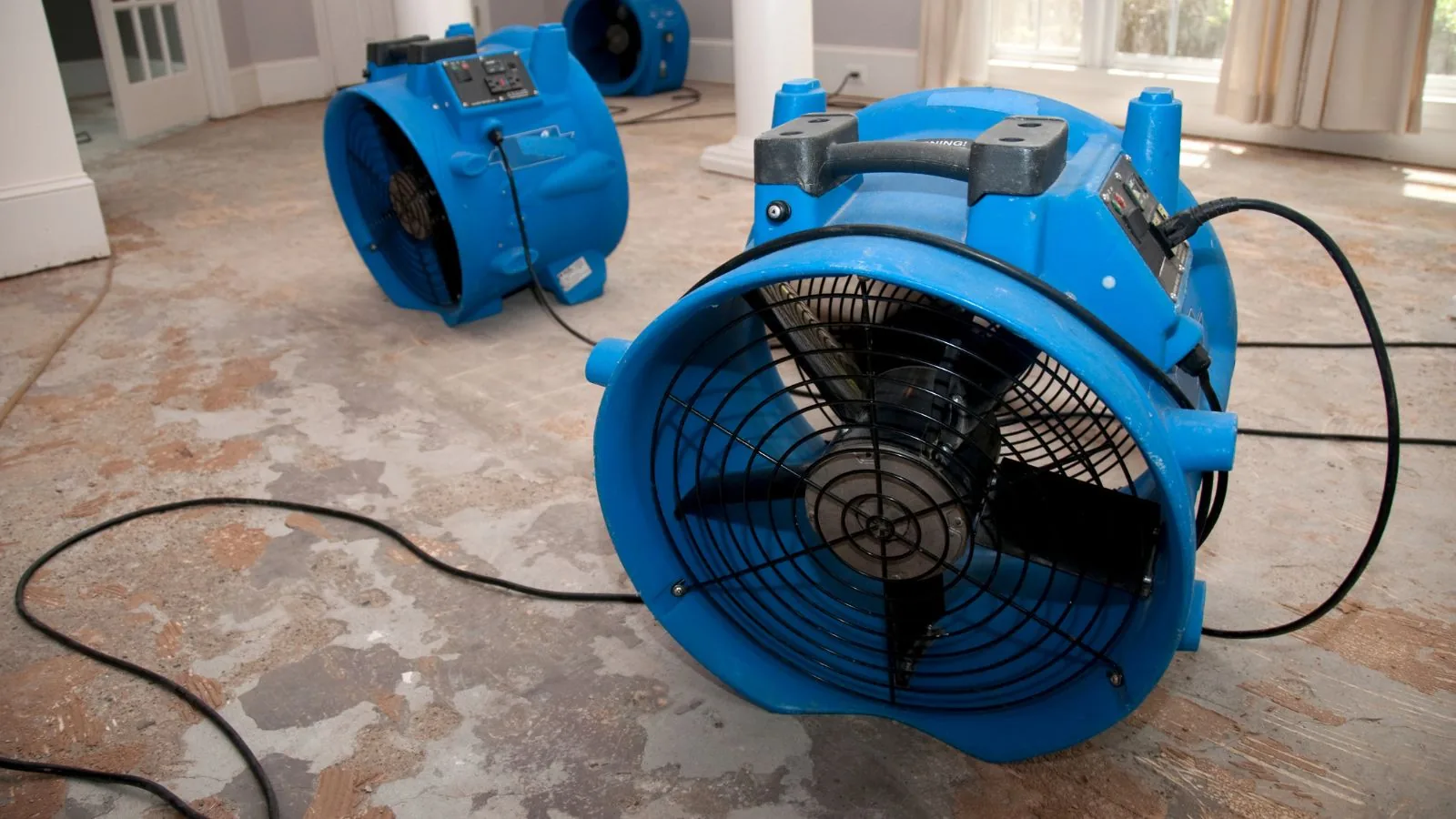
Equipment lines list the type, number of units and days. A typical drying job lists air movers and dehumidifiers. Ask how the count was chosen. Industry guidance such as the IICRC S500 describes how drying equipment is sized, and a contractor should be able to explain the reasoning in plain language. Daily readings show whether the days are needed.
Alvin Note
Because many Alvin homes are on slabs, water that reaches one room can travel under walls into the next. The scope should reflect moisture readings beyond the stain. The Texas Department of Insurance advises that hidden damage be reported within days and that photographs be kept. Ask the contractor to attach photos and readings to the scope so your adjuster can match each line to evidence.
Demolition Lines
Demolition lines list what is removed. Good scopes explain why. For example, drywall cut two feet above the waterline because moisture readings showed wicking. Vague lines such as demolition, all rooms are a warning sign.
Change Orders
Water damage often reveals more damage after walls open. A scope should explain how changes are handled. A change order is a written addition to the scope, with price and reason, that you approve before the extra work happens. Ask how that works before you sign.
- Ask for changes in writing before the work is done.
- Ask for photos that support the change.
- Ask whether the change is mitigation or repair.
- Send changes to your insurer promptly.
Exclusions and Assumptions
Look for the lines that say what is not included. Typical exclusions are permits, mold testing, repair of the source, electrical and plumbing repairs and contents. Assumptions describe what the price depends on, such as water category or access.
A Quick Checklist Before You Sign
- Does each wet room appear?
- Do the quantities look reasonable?
- Are equipment days stated?
- Are mitigation and repair separate?
- Are exclusions listed?
- Is there a process for changes?
- Do you understand what you owe if the insurer pays less?
See flood damage cleanup for how contaminated-water scopes differ, and Liverpool for the area we serve.
Common Abbreviations in a Scope
| Abbreviation | Meaning |
|---|---|
| SF. | Square feet. |
| LF. | Linear feet. |
| EA. | Each. |
| R&R. | Remove and replace. |
| D&R. | Detach and reset. |
| Mit. | Mitigation. |
| Cat 1, 2, 3. | Water categories, clean to contaminated. |
| AM. | Air mover. |
| DH. | Dehumidifier. |
If a scope uses an abbreviation you do not recognize, ask. Estimating software uses a lot of shorthand, and a good contractor will translate.
Pricing Logic
Prices in a scope usually come from a regional price list updated regularly. They include labor, materials and overhead. Contractors adjust them for the job. If a unit price looks high or low, ask how it was set. Your adjuster may use the same price list, which is one reason differences between scopes are often about quantity, not price.
Photos and Readings as Support
Every demolition line should be supported by photos and, ideally, moisture readings. Ask your contractor to attach them to the scope, labeled by room. That package is what an adjuster wants to see. It shortens disputes, since each line points to evidence.
A Sample Line, Explained
Suppose a line reads: remove and dispose of wet drywall, 4 feet high, 28 linear feet, with a unit price and a total. The height and the length tell you how much was removed. A four-foot cut is standard where water wicked up from the floor. Ask whether moisture readings showed water at that height. If the photos show water only a few inches up the wall, a four-foot cut may be more than you need.
Now consider an equipment line: air mover, 8 units, 4 days. That means eight fans running for four days. Ask what readings justified eight, and whether daily visits will adjust the count as areas dry. A good contractor reduces equipment as rooms reach dry standards.
Comparing With the Adjuster's Scope
If your insurer prepares its own scope, place the two side by side. Mark lines that appear in one and not the other. Ask the contractor to explain each difference, and send the answer, with photos and readings, to the adjuster. Most gaps are explained by details the adjuster did not see.
Questions to Ask Before You Approve the Scope
Ask the contractor to walk you through the scope room by room. Ask which lines are required immediately and which can wait. Ask what would cause the scope to change, and what the process is for approving changes. Ask whether photos and readings support each major line.
- Which lines are emergency mitigation and which are repairs?
- What did the moisture readings show in each room?
- Why was each material removed or kept?
- How many equipment days do you expect, and what could change that?
- What is excluded, and who handles it?
A contractor who answers these without hesitation has probably built the scope carefully. One who cannot explain a line may have copied it from another job.
Keeping the Scope Useful After the Job
When the job ends, ask for a final version of the scope that matches the work actually done, with final photos and the last set of readings. Keep it with your insurance paperwork and home records. If you sell the house, it shows what was damaged and how it was fixed, which answers a buyer's questions.
A pipe loss is a good example to practice on, and burst pipe water damage lists the usual scope lines.
If your home is outside Alvin, crews also serve Manvel, Liverpool and Pearland.
Scope Questions in Alvin
What if the contractor's scope and the adjuster's scope differ?
Ask each to explain the lines that differ. Provide photos and readings. Request a reinspection if needed.
Do I have to accept every line?
You can ask questions and negotiate. Do not approve work you do not understand.
What does SF mean?
Square feet. LF is linear feet. EA is each.
Is the scope a contract?
It is part of the agreement. Read the whole document.
Who can help me review one?
Ask your agent, a public adjuster or an independent contractor to look at it.
Water Still Spreading?
Call the 24/7 emergency line and tell the dispatcher what happened.
Call (844) 950-6900