
Does Homeowners Insurance Cover Water Damage in Alvin, TX?
Usually yes when the water was sudden and accidental, such as a pipe that burst. Usually no for slow leaks and for flood. Here is how the line is drawn.
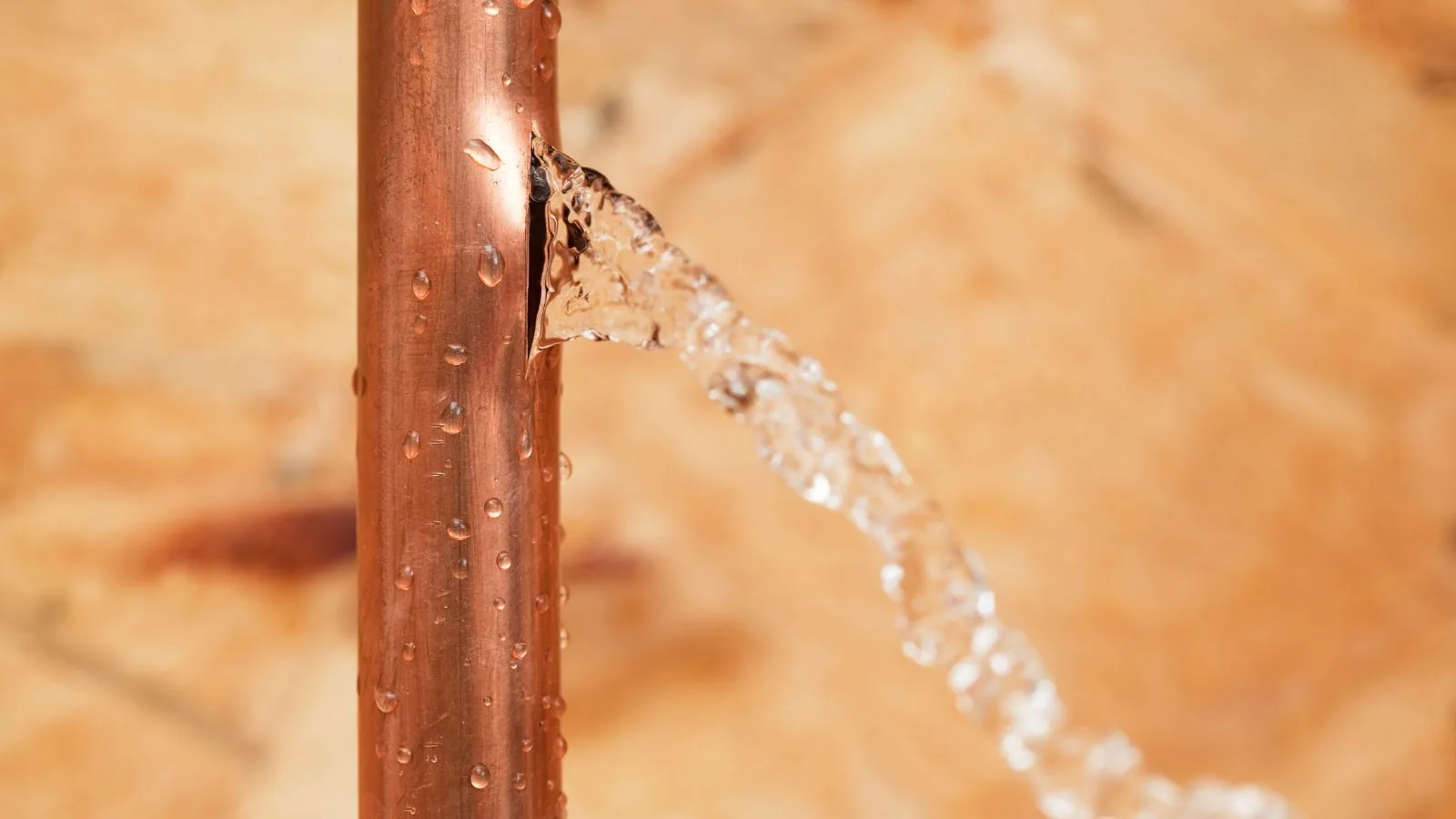
Short answer: most Texas homeowners policies cover water damage that is sudden and accidental, such as a supply line that bursts or a water heater that fails. They generally do not cover damage from a leak that went on for weeks or months, and they do not cover flood. The Texas Department of Insurance (TDI) says the same in its consumer guidance. The details depend on your own policy, so the paragraphs below show how to read it.
Sudden and Accidental Versus Gradual
Insurers separate two kinds of leaks. A sudden leak happens at a point in time. A washing machine hose splits on Tuesday morning and floods the laundry room by noon. A gradual leak happens over a long period. A fitting under the sink drips for half a year and the cabinet rots from the inside.
TDI says gradual leaks and seepage are generally not covered. The reason is that insurers treat them as a maintenance problem. They expect the owner to notice and repair a slow leak. When an adjuster inspects, evidence of long exposure, such as rust, rot or heavy mold, can change the outcome of a claim.
| Situation | Typical treatment |
|---|---|
| Pipe bursts inside a wall. | Usually covered as sudden and accidental. |
| Water heater tank ruptures. | Water damage usually covered. The heater itself usually is not. |
| Slow drip under a sink for months. | Usually excluded as gradual. |
| Roof leak after a storm. | Often covered if the roof was damaged by a covered peril. |
| Rising water from outside. | Flood. Needs a separate flood policy. |
| Sewer backup. | Often excluded unless you added an endorsement. |
Flood Is a Separate Policy
Standard homeowners policies do not cover flood. Flood means water that rises from outside, such as bayou overflow or storm surge. You need a separate flood policy, often through the National Flood Insurance Program (NFIP) or a private insurer. TDI notes that NFIP claims have to be filed within 60 days of the loss.
This matters in Alvin. Brazoria County's hazard mitigation plan, adopted in 2018, puts Alvin's annual chance of flooding at 35 percent and notes that Mustang Bayou runs along the edge of the city. If your home is near that floodplain, a flood policy is something to ask your agent about before the next storm, not after it.
Alvin Note
The National Weather Service in Houston reports that Tropical Storm Claudette produced an official one-day rainfall of 27.75 inches at Alvin in July 1979, and Hurricane Harvey in 2017 produced 33.60 inches at a gauge 1.6 miles southwest of the city. Wind and rain from storms like these can produce a mix of covered and uncovered damage in one house, such as a roof leak and rising water together. The adjuster will separate them, so photograph each source.
What Your Policy May Pay For
- Removing the water and drying the structure after a covered loss.
- Replacing damaged drywall, flooring and insulation.
- Damaged personal belongings, subject to your contents limits.
- Additional living expenses if you cannot stay in the home.
Many policies do not pay to repair the thing that failed. If a pipe burst, the plumber's repair of the pipe may not be covered, but the damage it caused may be. Ask your agent how this works in your policy.
What to Do to Help Your Claim
- Stop the damage. Shut off the water or cover the roof. Insurers expect you to prevent further loss.
- Take photos and video of the damage as soon as it is safe.
- Keep damaged items until the adjuster has seen them, or photograph them first. TDI advises not to discard them before then.
- Report the loss promptly. TDI also notes that hidden damage should be reported within days of discovery.
- Keep receipts for emergency repairs and equipment.
- Ask for a copy of the adjuster's estimate and compare it to the contractor's scope.
A restoration company documents the loss with photos and daily moisture readings. See our water extraction page for how that works. For water from a leaking pipe, burst pipe water damage explains the steps.
What If the Claim Is Denied or Low?
Read the denial letter and the policy language it cites. Ask for the adjuster's report. You can ask for reinspection, provide more documentation or hire a public adjuster. TDI takes complaints about insurers at its helpline, 800-252-3439. Keep copies of everything and note dates of every call.
Mold After Water Damage
Mold is the other half of this question. TDI says mold cleanup and testing are usually not part of a standard policy, and mold that results from a long-term leak is generally not covered. Some policies cover mold that follows a covered sudden loss, within limits. Dry the building fast, because that is what keeps mold from becoming a claim problem. See our guide on water damage restoration in Manvel or in Pearland if you are outside Alvin.
Reading Your Own Policy
Policies are long, but the water damage rules sit in a few places. Start with the declarations page, which lists your coverage limits and deductibles. Then read the section that lists covered perils, and the section that lists exclusions. Look for the words sudden, accidental, continuous, repeated and seepage. Those words decide most disputes.
- Find your deductible. A small loss may cost less than the deductible.
- Look for a separate wind and hail deductible, which is common on the Gulf Coast.
- Check whether your policy pays replacement cost or actual cash value for the house and for belongings.
- Look for water backup coverage, which is usually an add-on.
- Note the time limits for reporting and for filing a proof of loss.
If the wording is unclear, ask your agent to explain it in writing. A quick email before a loss is much easier than a dispute after one.
Small Losses and Deductibles
Many homeowners wonder whether to file a claim for a modest leak. If repairs cost less than your deductible, a claim pays nothing. Even so, tell your insurer what happened if there is any chance the damage is larger than it looks. Hidden moisture can turn a small leak into a big one. Dry the area fully, keep photos and logs, and decide with your agent whether filing makes sense.
Filing too many small claims can affect renewal in some cases. That is a reason to discuss the choice with an agent, not a reason to leave damage unreported. A fast, well-documented repair is your best protection either way.
Renters and Condo Owners
Renters carry a different policy. A renters policy covers your belongings, and often additional living expenses, but not the building. Your landlord's policy covers the structure. Condo owners usually have a master policy through the association for the building and their own policy for the interior and belongings. In all cases, report the loss to the right parties and keep records of each conversation.
Local Questions
Does homeowners insurance cover a burst pipe in Alvin?
Usually yes. A burst is sudden and accidental, so the resulting water damage is commonly covered. The policy may not pay for the pipe repair itself.
Do I need flood insurance in Alvin?
If you want flood damage covered, yes. Standard policies exclude it. Brazoria County's hazard plan describes flooding as a recurring risk in parts of Alvin, so ask your agent about your address.
Will my rates go up if I file?
It can happen. Ask your agent how claims affect your premium, and weigh that against the cost of the damage.
How long do I have to report a loss?
Report as soon as you discover it. Your policy sets deadlines, and NFIP flood claims have to be filed within 60 days.
Who decides whether water damage is covered?
Your insurer. A restoration company documents the damage but does not decide coverage.
Water Still Spreading?
Call the 24/7 emergency line and tell the dispatcher what happened.
Call (844) 950-6900